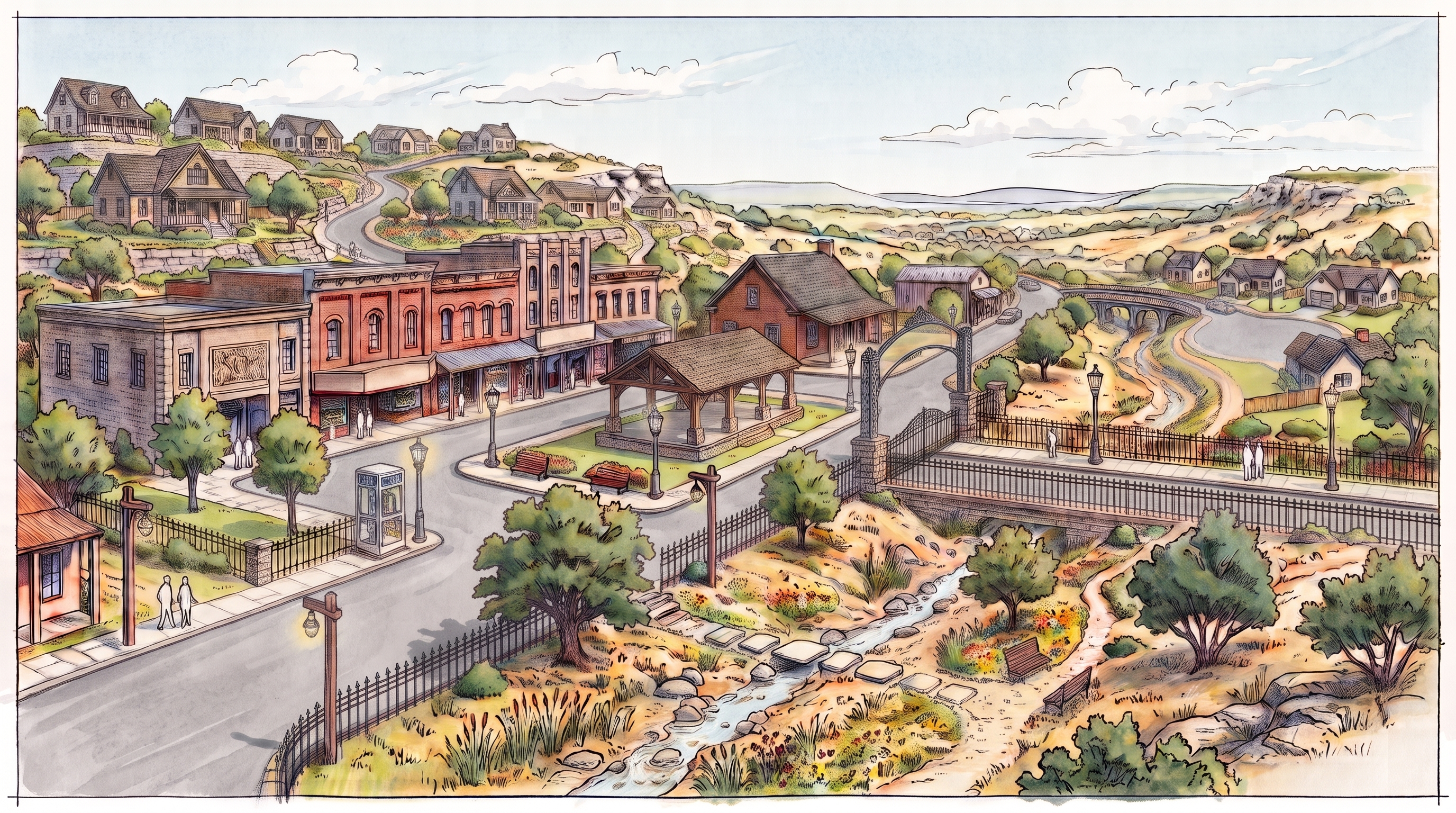
Downtown Anamoya, where life moves slower, intentionally
This isn't a theme, and it isn't a costume. It's a trip back in time. No Wi-Fi, no cell signal, no modern screens: this isn't just another off-grid resort, it's an offline resort where social media is replaced with social life.
Be first to know when the campaign goes live, no spam, just the launch.
You're on the list. See you in 1997.
Downtown Anamoya, where life moves slower, intentionally
Anamoya is what life actually felt like in the '90s: layered, social, real. Main Street hums with it: the arcade, the photo studio and darkroom, the library, the convenience store with its wall of video rentals. Step into the neighborhoods and the pace changes again. Saturday block parties are the event everyone plans their week around, and Sundays mean riding bikes with friends until the streetlights come on.
The internet wasn't something you carried in your pocket. It was a destination, and it had a time limit.
That's the standard here: real comfort, no signal, and no schedule telling you when to disconnect, because the option simply isn't there.
Anamoya isn't opening as members-only. The plan is a full calendar of seasonal events and day passes, open to anyone who books, no membership required.
The land had to sit within an hour of a major airport, come with real acreage and existing structures and utilities already in place, and have enough topography and tree cover that it doesn't feel manufactured. Emergency services close by wasn't optional. The Texas Hill Country was one of the only regions that checked every box.
Once you're actually here, the land does a lot of the work on its own: bluebonnet walks in the spring, cave excursions, local winery tastings, and some of the darkest skies left in Central Texas, the kind of stargazing that's disappeared almost everywhere else.
Skill classes in textiles, furniture, and era-appropriate mechanical repair: typewriters, film cameras, turntables, tube radios.
Bluebonnet walks, cave excursions, local winery tastings, and dark-sky stargazing built into the seasonal calendar.
A real arcade, a photo studio with a working darkroom, a library, and a convenience store with a wall of video rentals.
A car-free, walkable campus with a Faraday-shielded conference building. Not a dead zone. A deliberate one.
Four people, four very different backgrounds, one shared bet: that a place built to be unreachable is worth more than one more app.
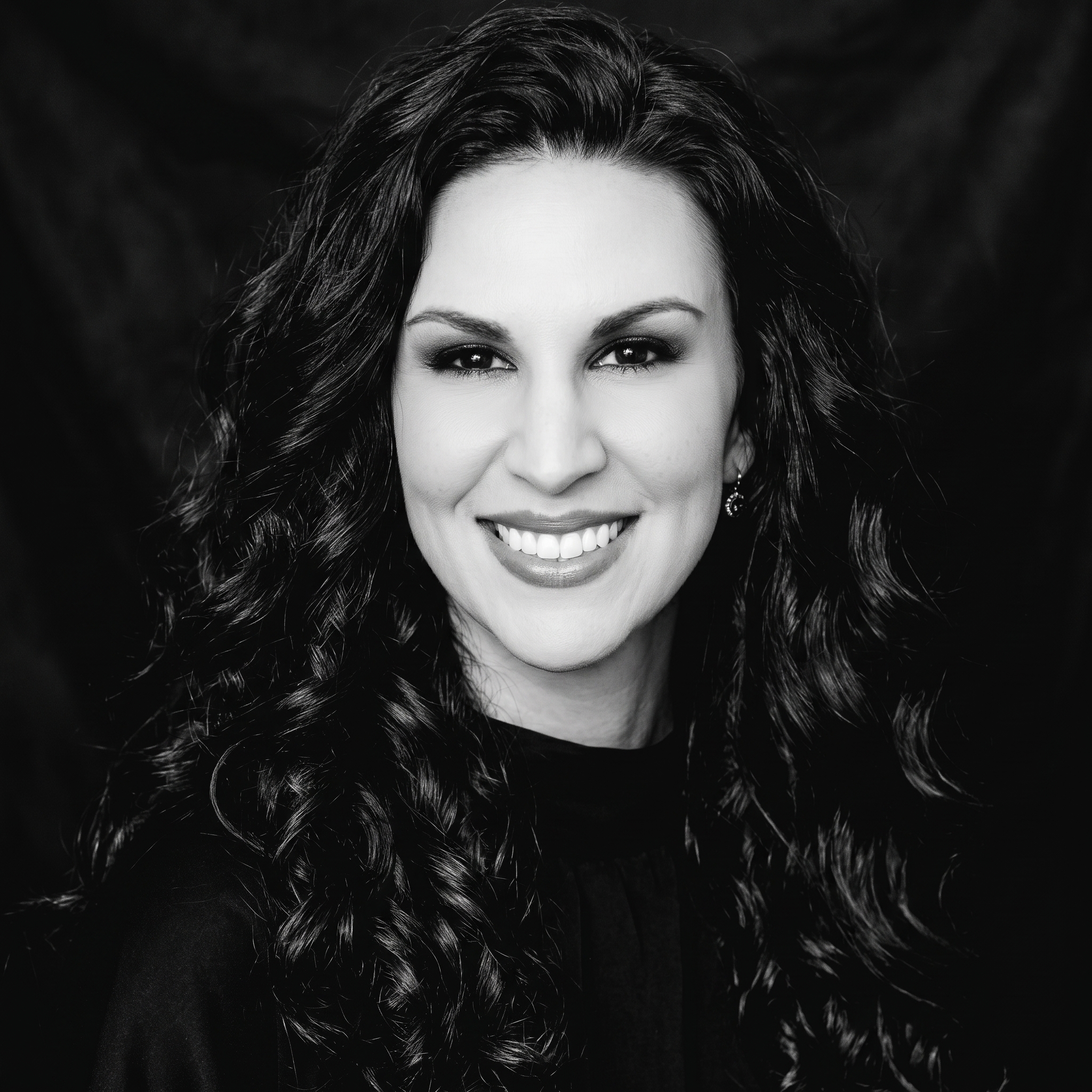
A U.S. Army veteran and lifelong entrepreneur, Katrina spent nearly a decade in tech as a Digital Forensic Analyst and Solutions Engineer before deciding to build something people could disconnect from instead. She has lived in China, Colombia, and Albania, and speaks Mandarin.

A retired U.S. Army Counterintelligence Special Agent with two combat deployments, Leah brings nearly three decades of combined military and Texas state government experience to Anamoya. She holds a Master's in Digital Media Arts and Engineering and has a patent-pending product currently in licensing negotiations.
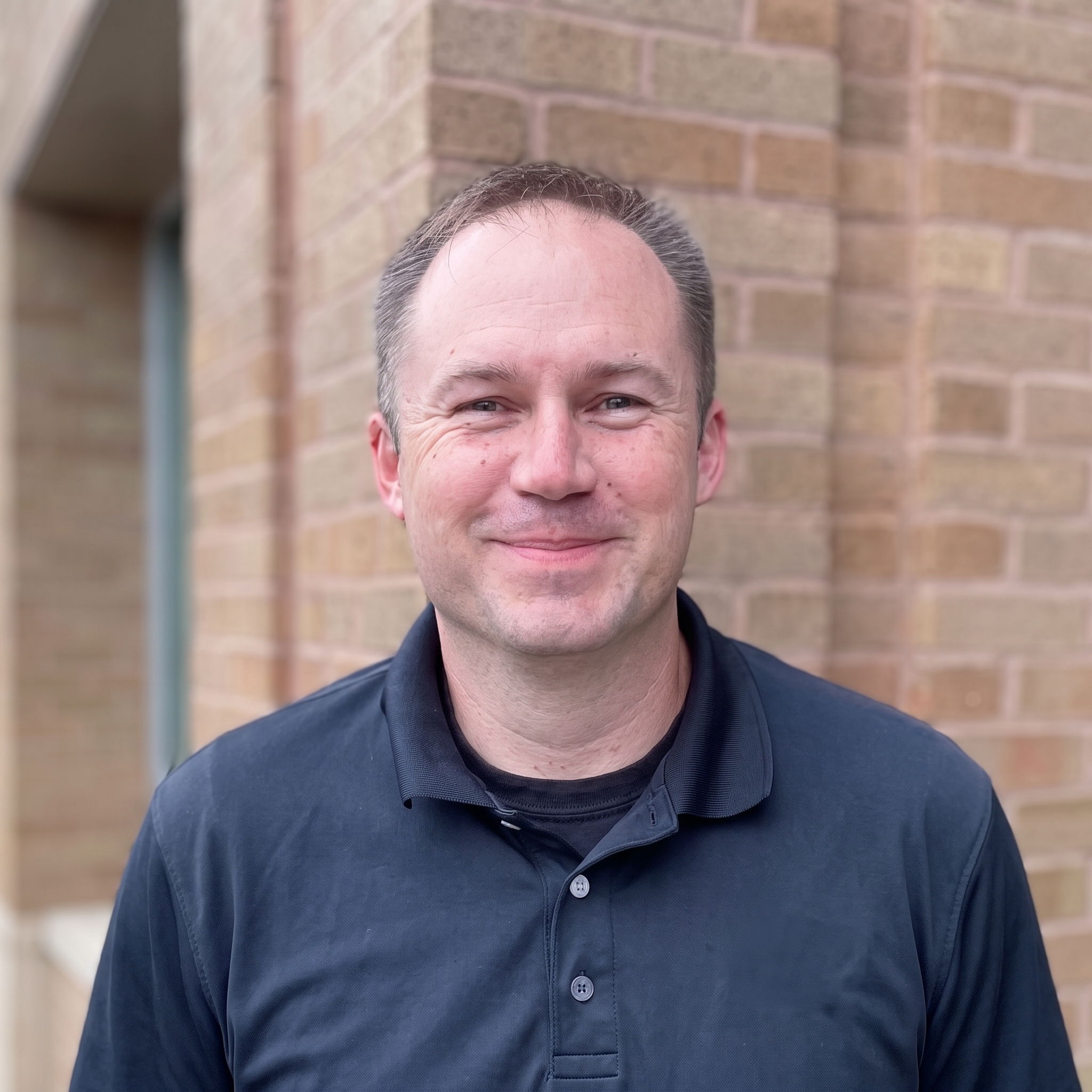
A 22-year military leader currently directing air mobility operations for INDOPACOM, Kevin holds a Master Navigator rating with 2,600 flight hours and a commercial pilot certification. Before the military, he spent seven years in civil engineering and general contracting.
An Army veteran and licensed REALTOR and Mortgage Loan Originator, Natalie built her career on a trauma-informed, service-first approach shaped by years as a domestic violence victim advocate. Ordained since 2015 and published in Hunter S. Thompson's Woody Creeker magazine, she brings that same steadiness to Anamoya.
This campaign isn't just funding construction, it's creating the town. Backers become the first townsfolk: the guests who show up opening week, the crowd at the summer concert series, the students filling the skills classes, the regulars who make Main Street feel lived-in from day one.
Every backer gets a spot on the Contributors' Wall on-site, plus early access to booking once Anamoya opens.